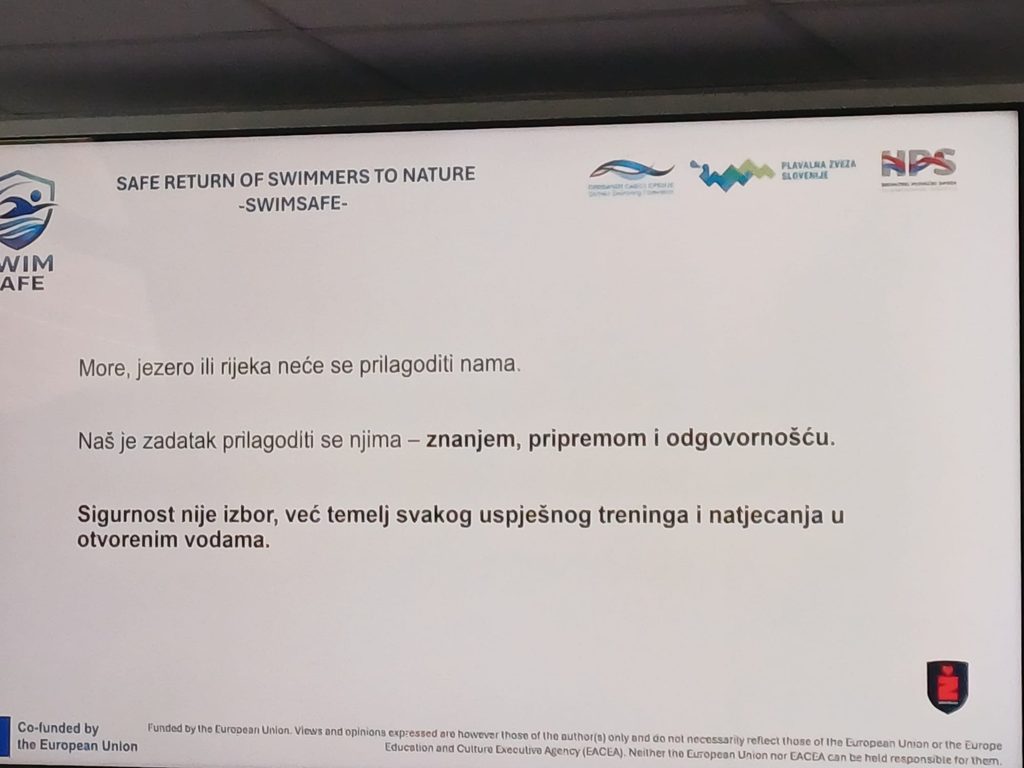
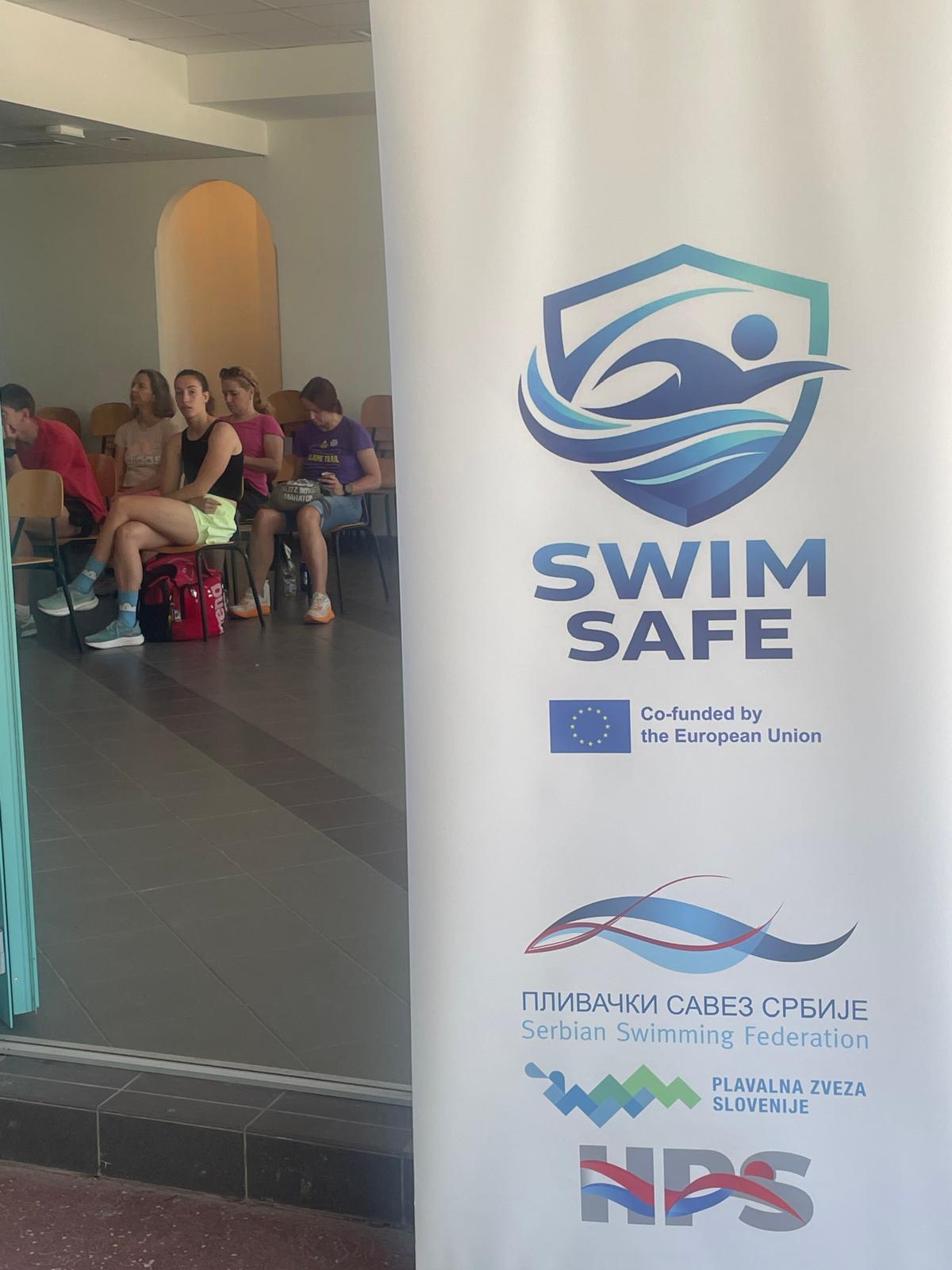
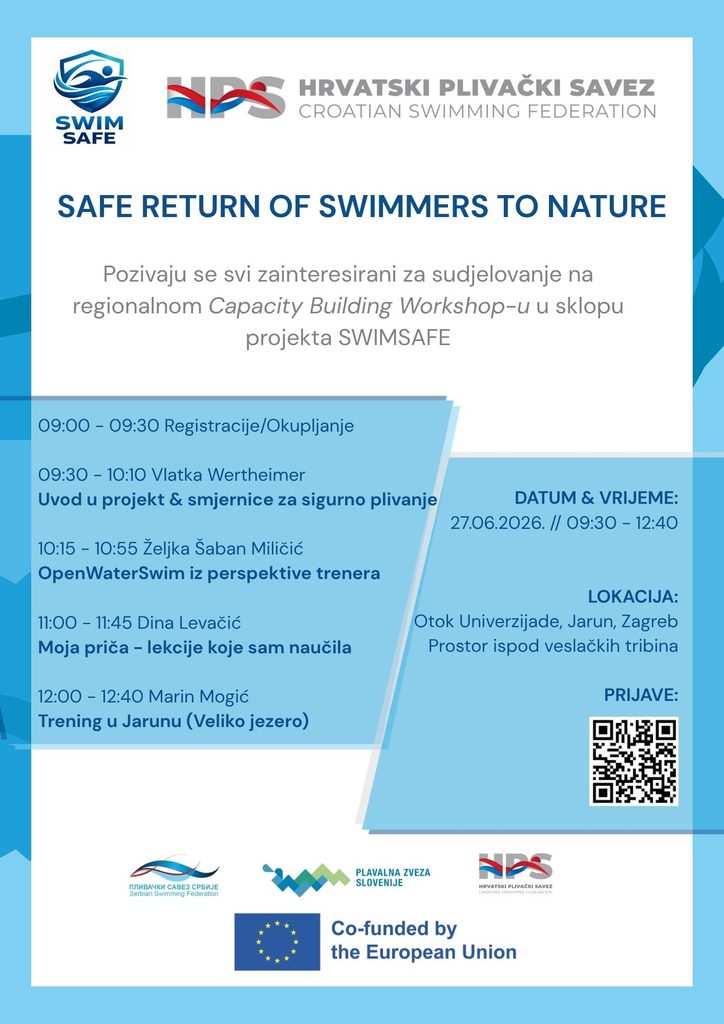
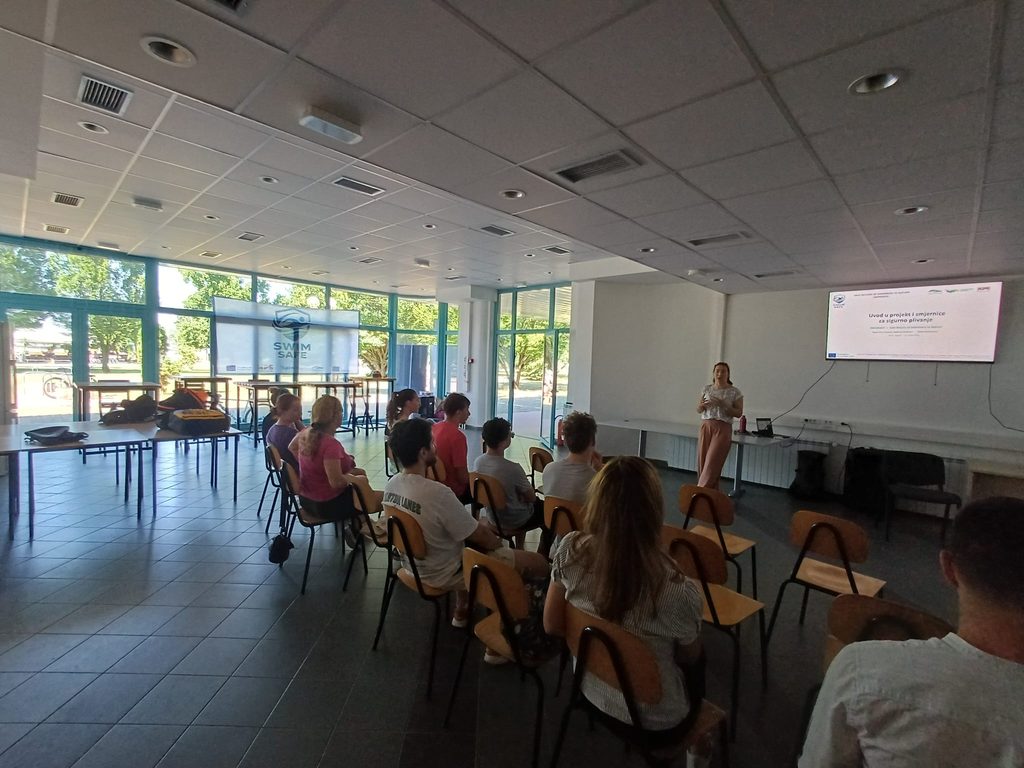
The Croatian Swimming Federation (Hrvatski plivački savez) hosted the SWIMSAFE regional capacity building workshop on safe open water swimming on Saturday 27 June at Otok Univerzijade on Jarun in Zagreb, in the space beneath the rowing grandstand. The morning ran from 09:30 to 12:40 and finished where it mattered most — in the lake of Veliko jezero Jarun.
The invitation was deliberately broad: coaches, swimmers, sports professionals and anyone drawn to swimming. Open water safety is not solely a coaching problem, and the person most likely to be nearest to a swimmer in difficulty is usually another swimmer.
Four sessions, ending in the lake
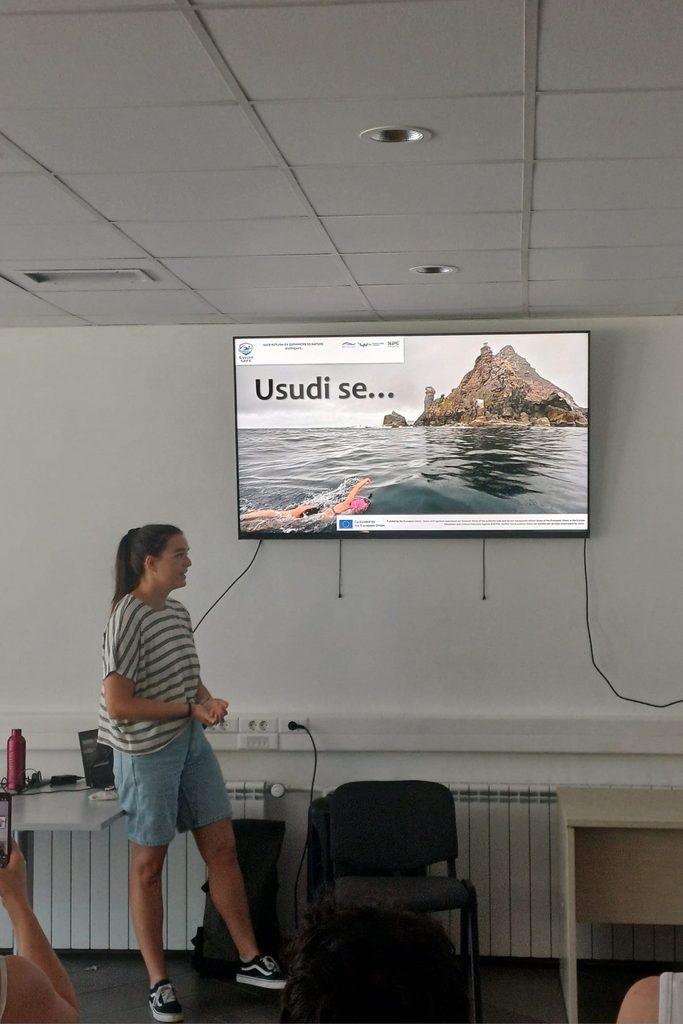
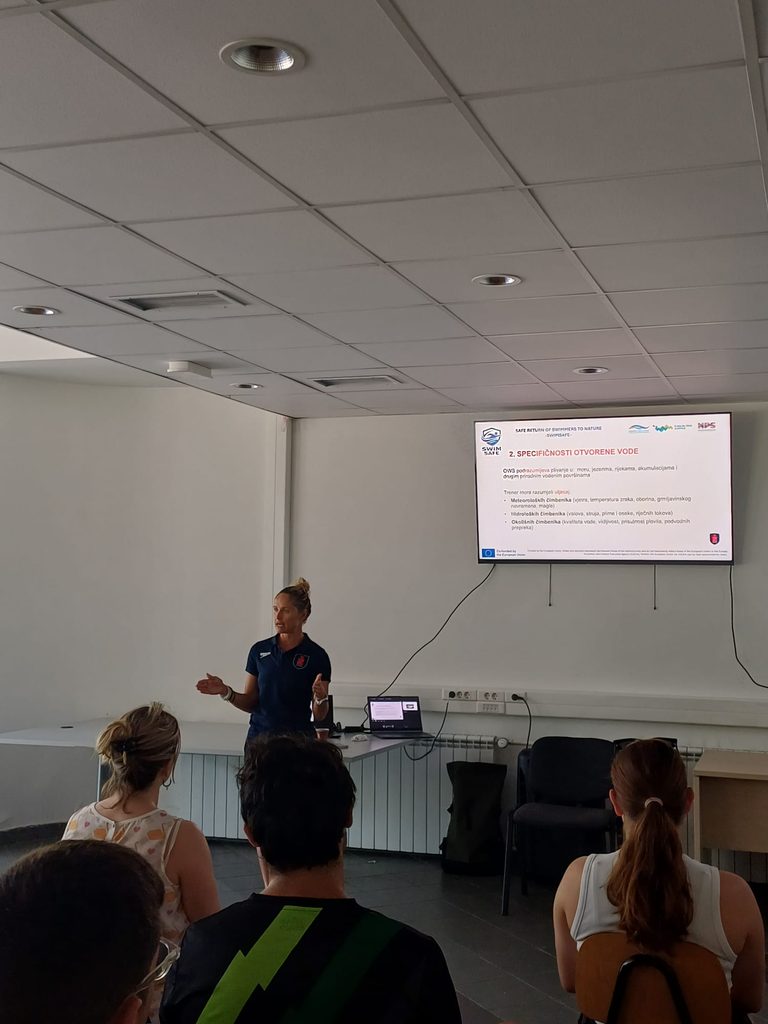
Vlatka Wertheimer opened with an introduction to the SWIMSAFE project and its guidelines for safe swimming, setting out the framework the rest of the morning would build on. Željka Šaban Milićić followed with open water swimming from a coach’s perspective — the planning, supervision and stop-criteria decisions that sit behind every session in natural water.
Dina Levačić then spoke under the title “My story — the lessons I learned”, drawing on her own experience as a long-distance open water swimmer. Accounts like hers do something a slide cannot: they make cold, fatigue and disorientation concrete rather than theoretical, and they carry particular weight with the swimmers in the room.
Marin Mogić closed the workshop with training in Veliko jezero Jarun. That in-water session is what distinguishes the Croatian event within the project. The SWIMSAFE Open Water Safety Guidelines specify a minimum practical element for every module, for a straightforward reason: the self-rescue sequence FLOAT · BREATHE · SIGNAL · DECIDE is built to be recalled under stress, and a sequence you have only read about is not one you will reach for when cold water hits. The same holds for CALL · SHOUT · REACH · THROW · GUIDE, the principle for helping someone without becoming a second casualty, which is rehearsed from land precisely so nobody improvises it for the first time in an emergency. Ahead of both sits STOP · LOOK · PLAN, the pre-swim check every participant should be able to run on an unfamiliar site.
The right lake for the lesson
Jarun is a fitting venue. Formed by the Sava and developed as a sports and leisure centre for the 1987 Summer Universiade, it has been used ever since for rowing, sailing and swimming. It is a real open water environment inside a capital city — exactly the kind of place where recreational swimmers meet open water conditions without always recognising them as such.
Within SWIMSAFE, the Croatian Swimming Federation leads training implementation, and the Jarun workshop forms part of a series of regional activities delivered across Serbia, Croatia and Slovenia during the project year. Each is adapted to its own water: coastal and inland conditions in Croatia, lakes and cold-water awareness in Slovenia, rivers and organised club environments in Serbia. The safety framework is shared; the application is local.
Knowledge exchange, new skills, and connections with specialists from across the region — that is the practical meaning of a project whose name is the safe return of swimmers to nature.
All project materials, including the Open Water Safety Guidelines and the digital learning modules, are available at www.swim-safe.eu.