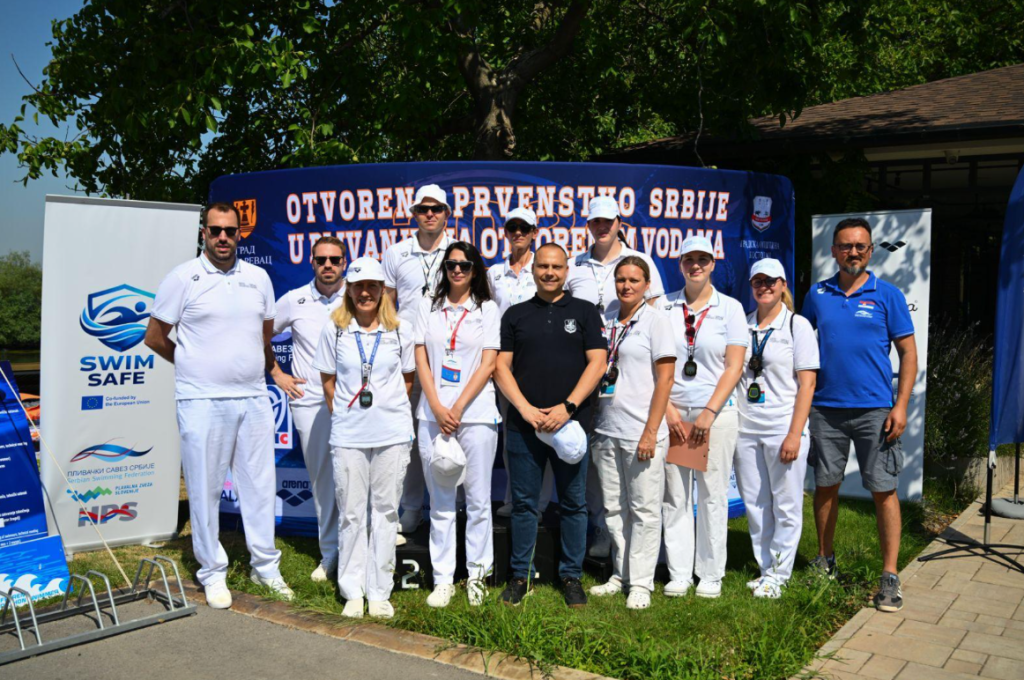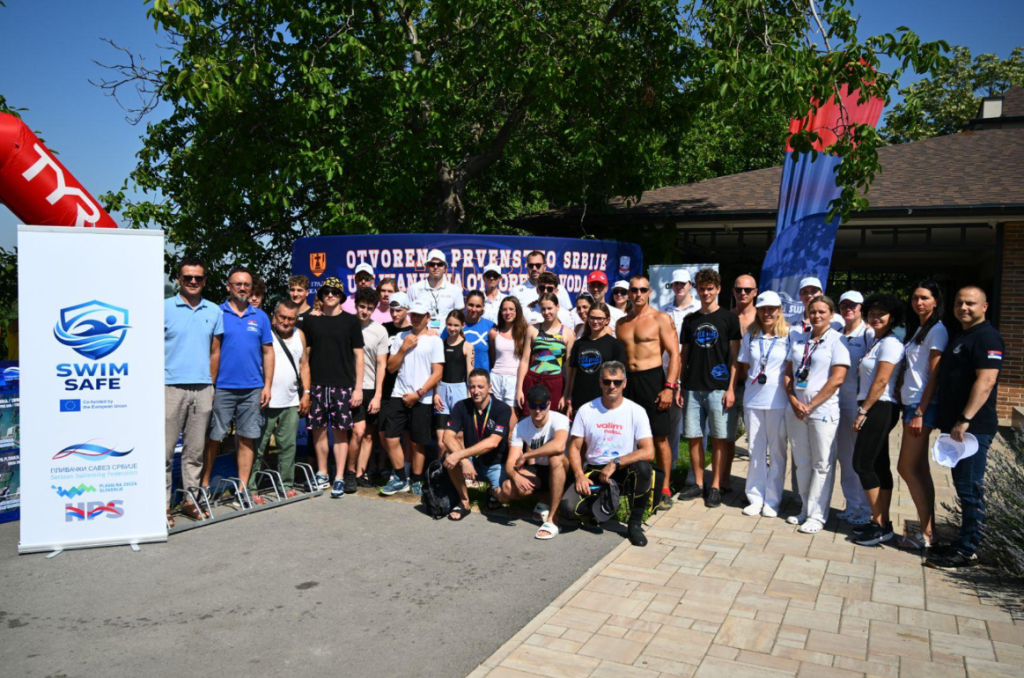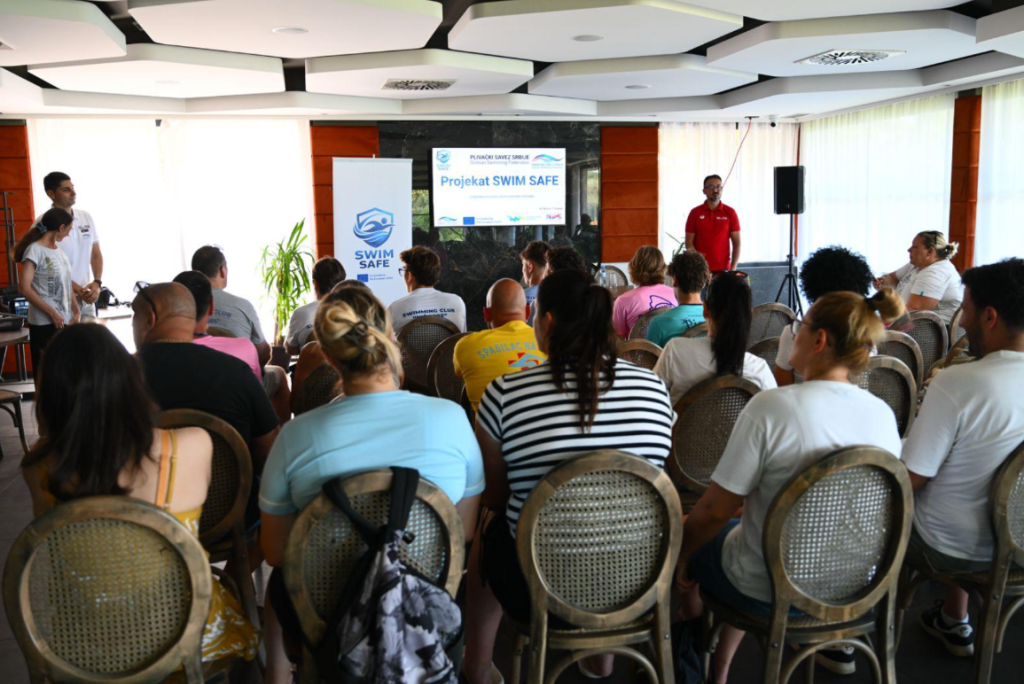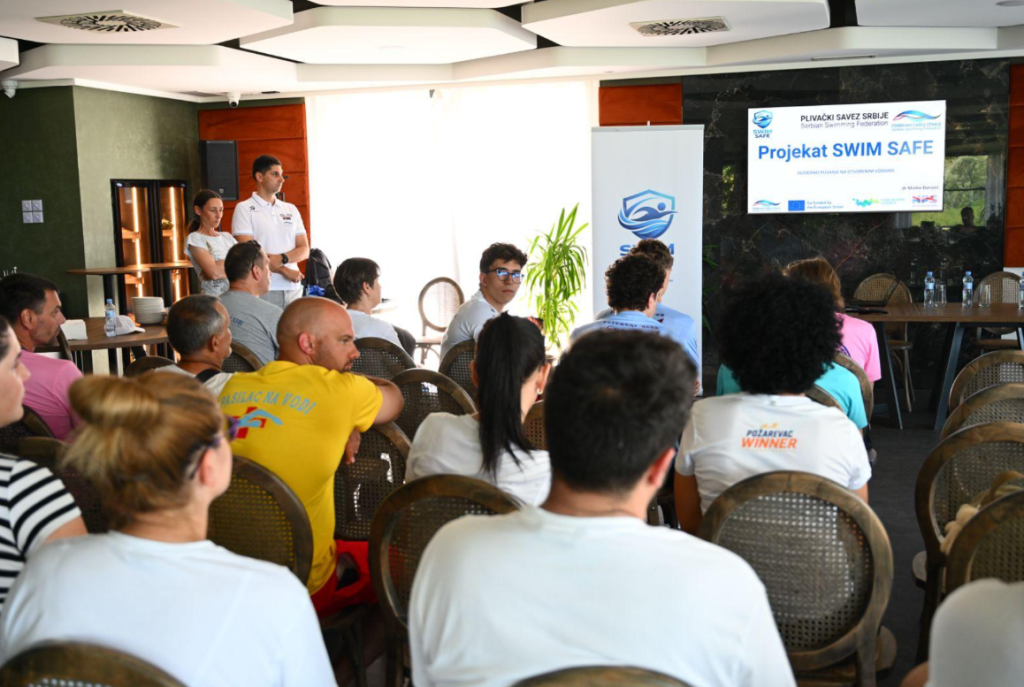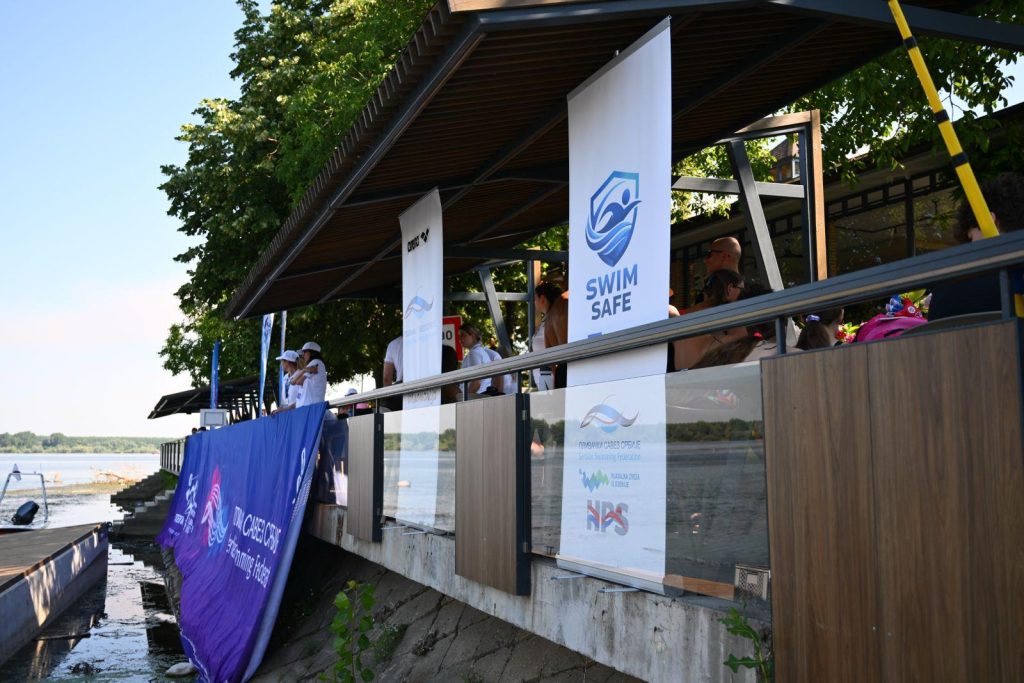
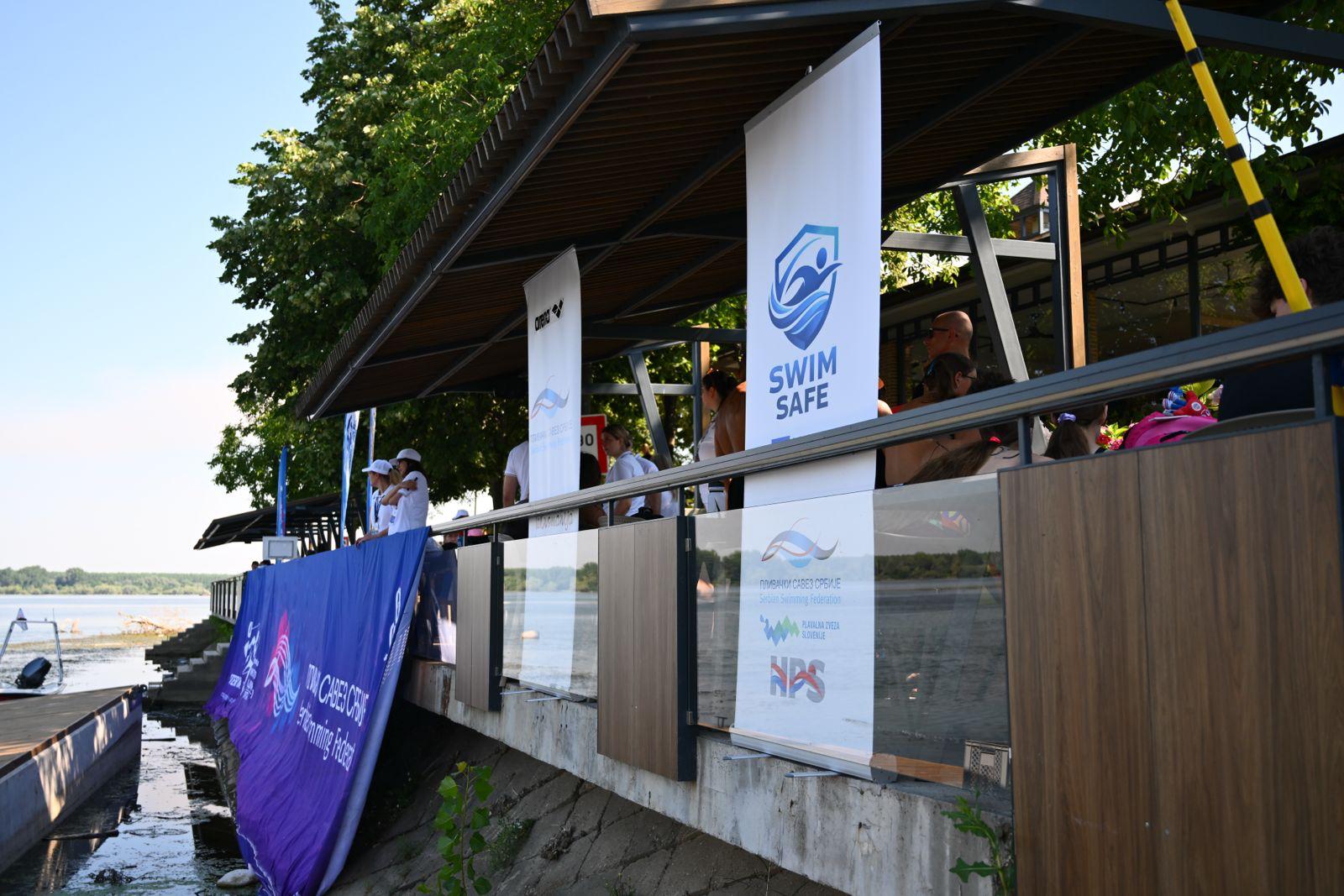
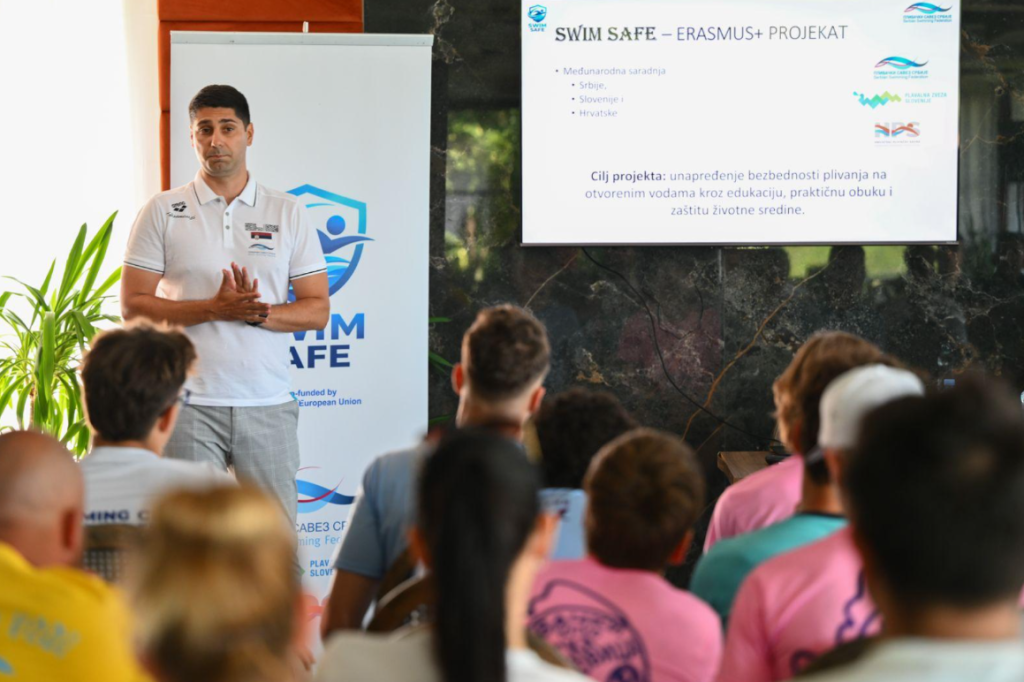
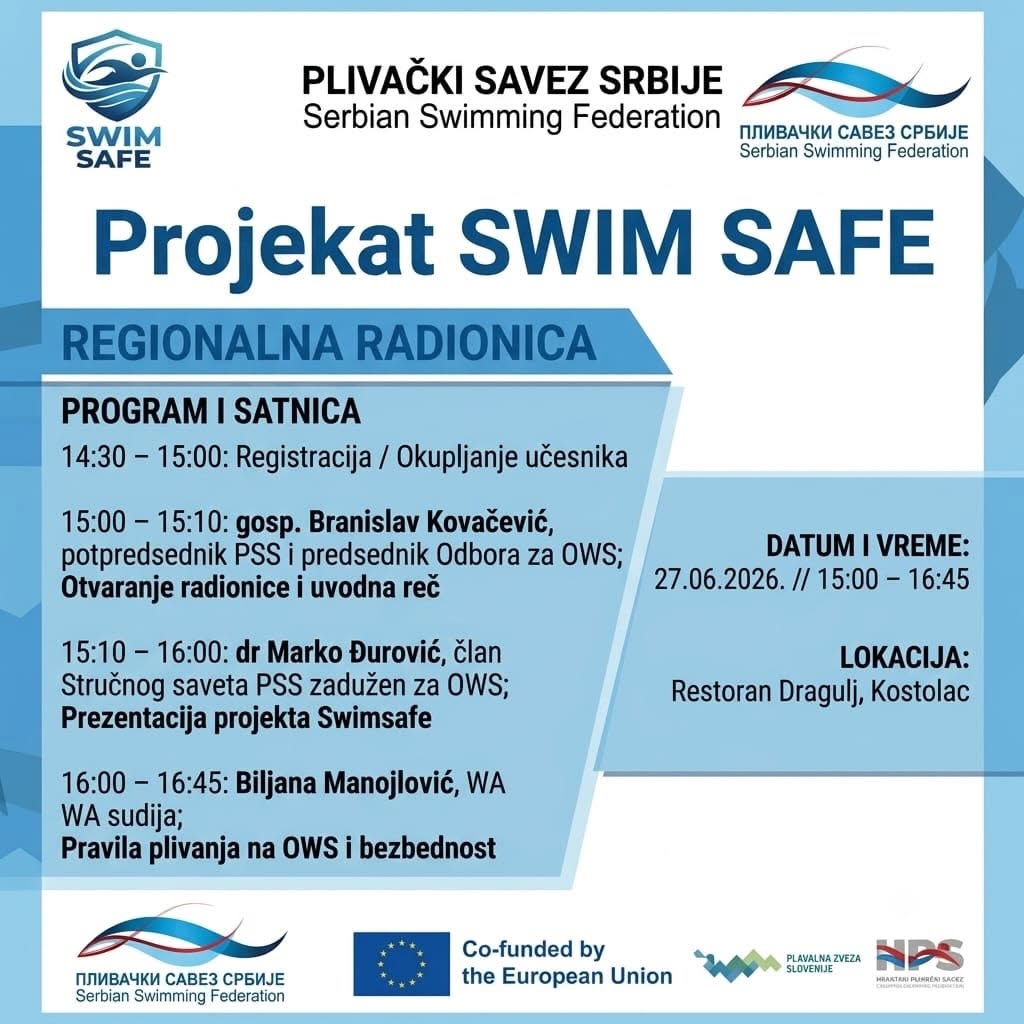
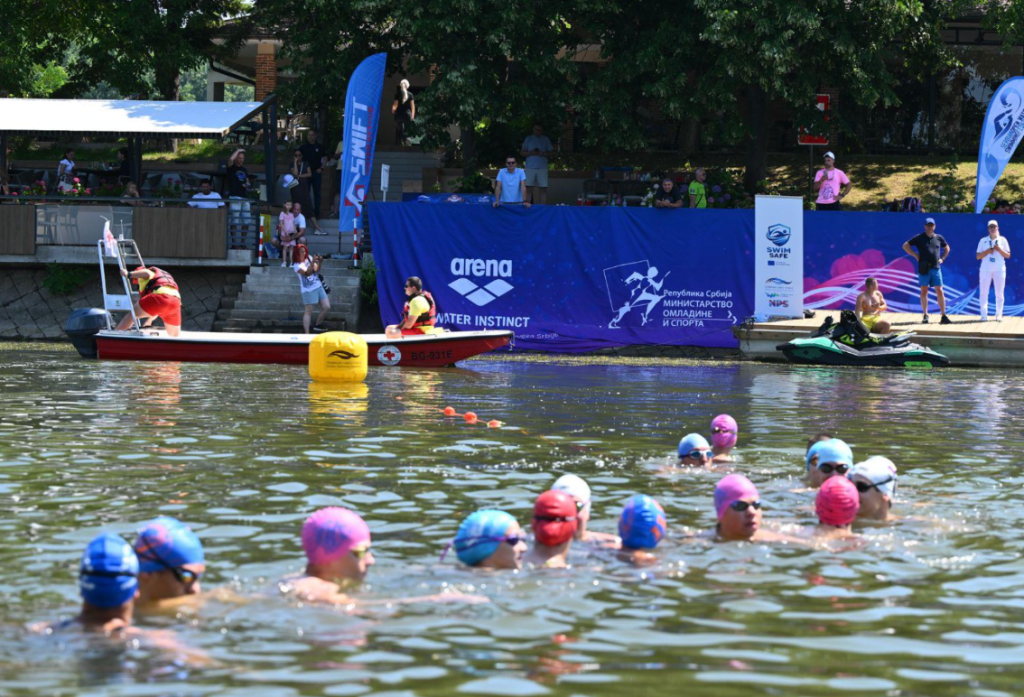
The Swimming Federation of Serbia (Plivački savez Srbije) held a SWIMSAFE seminar for swimming coaches on 27 June at the Dragulj restaurant in Kostolac, held as part of the Serbian Open Championship in open water swimming. Bringing coaches together at a live competition, rather than in a lecture hall away from the water, put the seminar’s subject matter directly in front of the people responsible for it, on the day they were responsible for it.
Kostolac sits on the Danube, in the City of Požarevac in Serbia’s Braničevo District, and the championship gave the seminar an unusually practical backdrop: for many of the coaches in the room, the conditions under discussion were the ones their swimmers were racing in that weekend.
Rules, and the safety that sits behind them
The programme covered the aims and activities of the SWIM SAFE project, the rules governing open water swimming, and the safety considerations that apply specifically at open water competitions. That last point is where the Serbian seminar differed in emphasis from the project’s other regional events, which have concentrated on club training and school swimming programmes. Competition brings its own risk profile — mass starts, large fields of swimmers spread over long distances, support boats on the course, water temperature limits, and the judgement calls officials and coaches must make when conditions shift mid-race.
For coaches, the practical question is rarely whether they know the rules. It is whether the safety framework behind those rules is clear enough to act on under pressure. The project’s Open Water Safety Guidelines are built for exactly that: STOP · LOOK · PLAN as a pre-swim risk check, FLOAT · BREATHE · SIGNAL · DECIDE as the self-rescue sequence a swimmer in difficulty can actually remember, and CALL · SHOUT · REACH · THROW · GUIDE for assisting someone in trouble without becoming a second casualty. Alongside these, coaches have access to ready-to-use templates for pre-session checks, site assessment and incident reporting.
A regional project, delivered nationally
SWIM SAFE is implemented by the Swimming Federation of Serbia in cooperation with the swimming federations of Croatia and Slovenia, and is funded through the European Union’s Erasmus+ Sport programme. The seminar in Kostolac forms part of a series of regional activities delivered across the three countries during the project year, each adapted to the water and the needs of its own setting — coastal and inland conditions in Croatia, lakes and cold-water awareness in Slovenia, rivers and organised club environments in Serbia.
That adaptability is deliberate. A shared safety standard is only useful if it survives contact with local conditions, and the fastest way to test it is to hand it to coaches and let them apply it at a real competition.
The Federation thanked all participants, speakers and partners for their contribution to the seminar. Together, the partners are working towards a safer environment for everyone taking part in open water swimming.
All project materials, including the Open Water Safety Guidelines and the digital learning modules, are available at www.swim-safe.eu.