
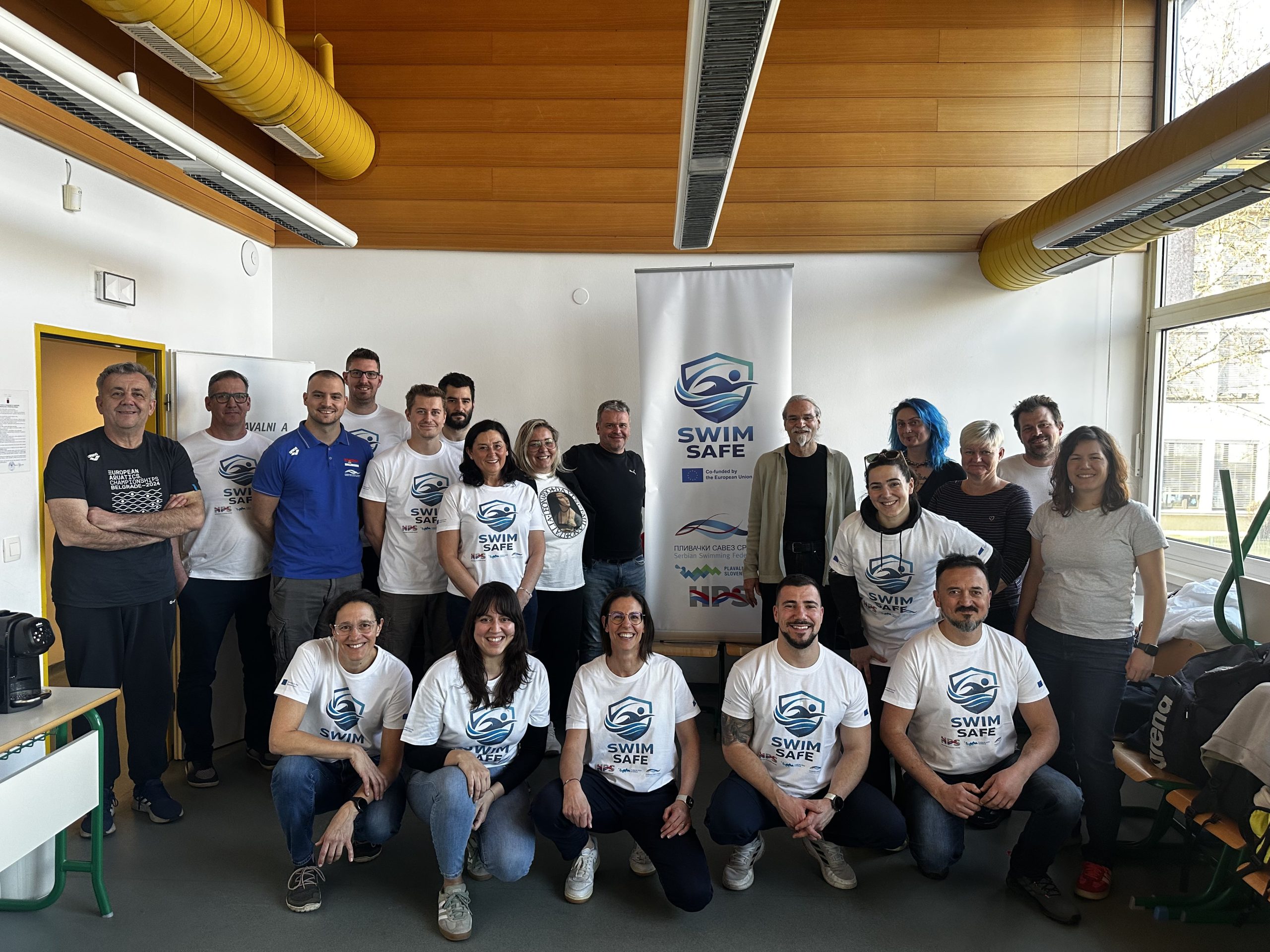
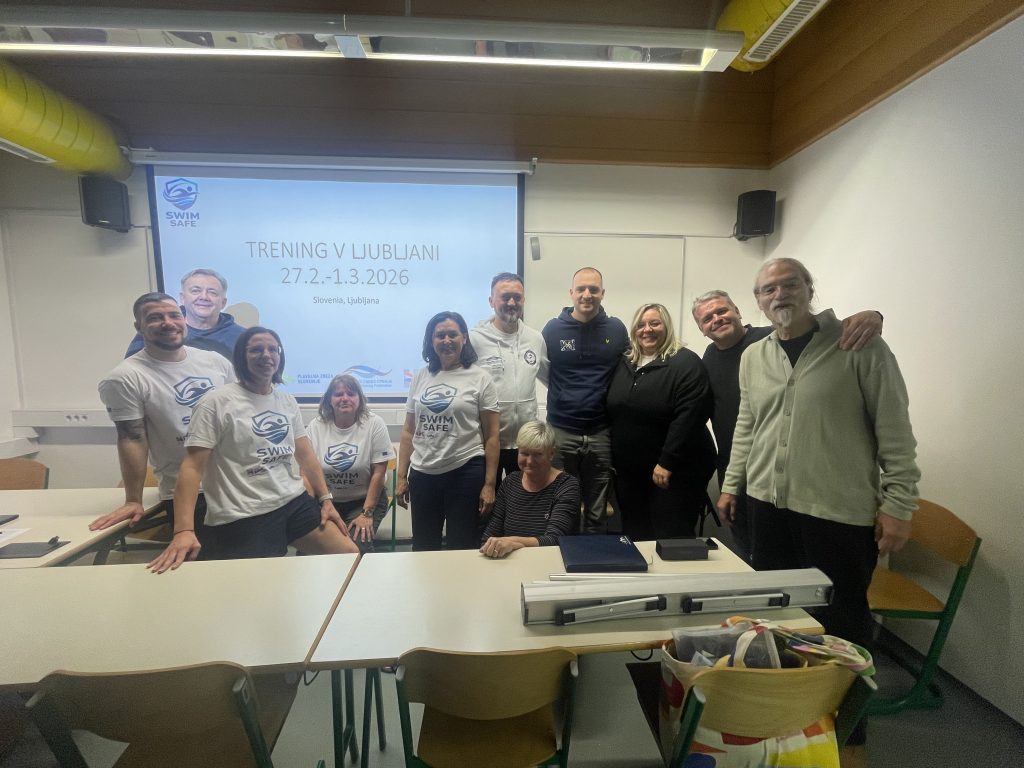
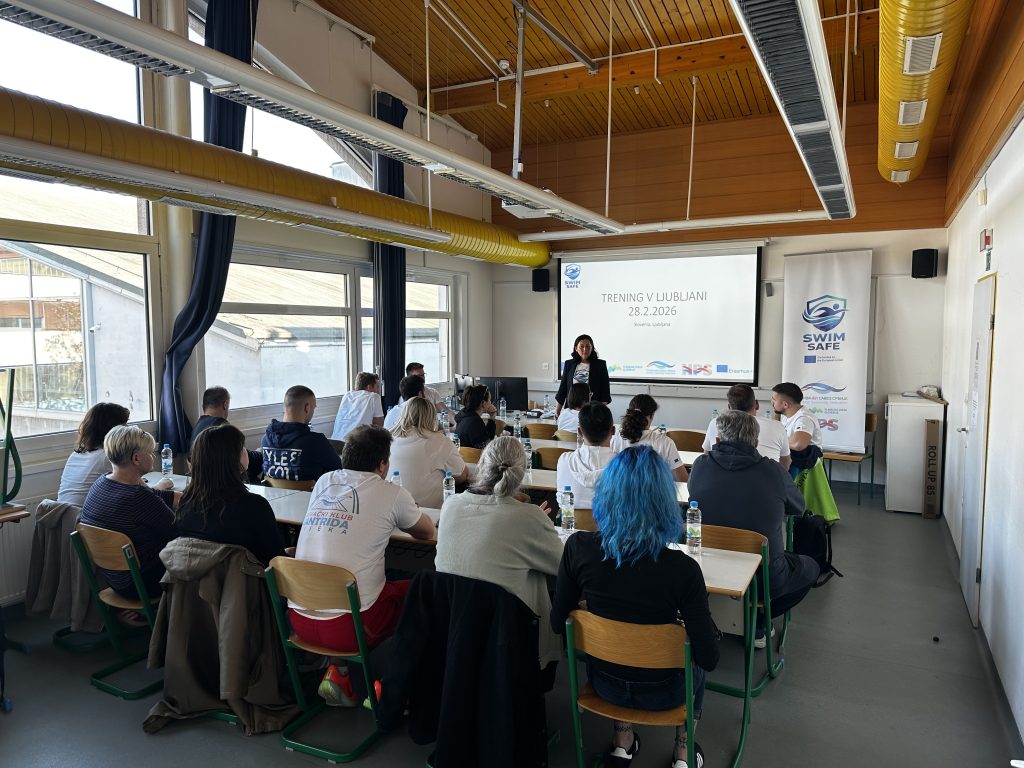
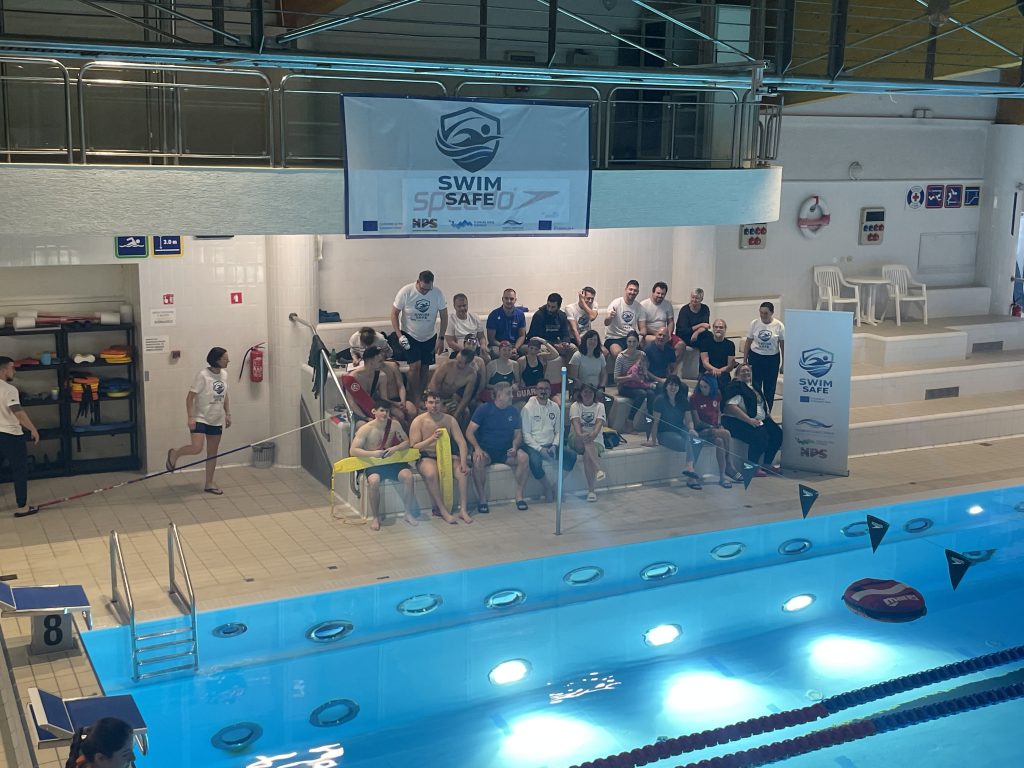
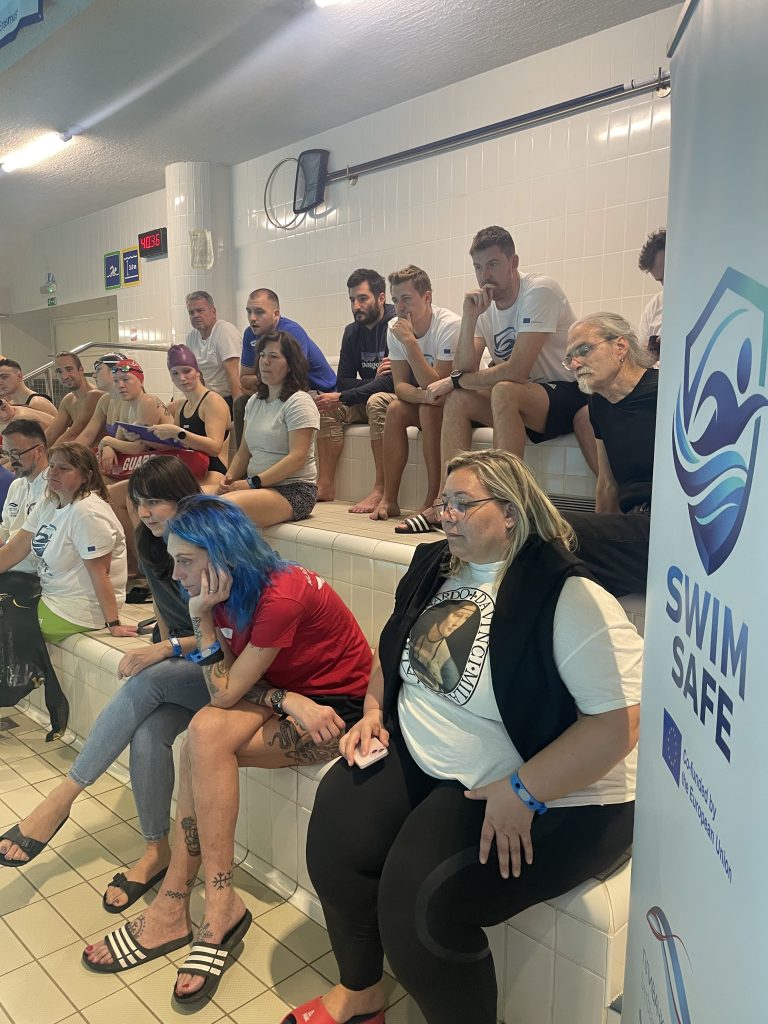
From February 27 to March 1, thirty-two swimming coaches from Croatia, Serbia, and Slovenia gathered at the Faculty of Sport in Ljubljana for an intensive three-day training programme dedicated to safety in open water swimming.
Hosted at the Faculty’s own swimming pool, the course brought together coaches from across the region to deepen their knowledge of the practical, psychological, and organisational aspects of teaching and coaching swimmers in open water environments — from recreational swim schools to competitive events. The training was delivered as part of SWIMSAFE – Safe Return of Swimmers to Nature, a project co-funded by the European Union under Erasmus+ Sport, and organised jointly by the Serbian Swimming Federation, the Swimming Federation of Slovenia and the Croatian Swimming Federation.
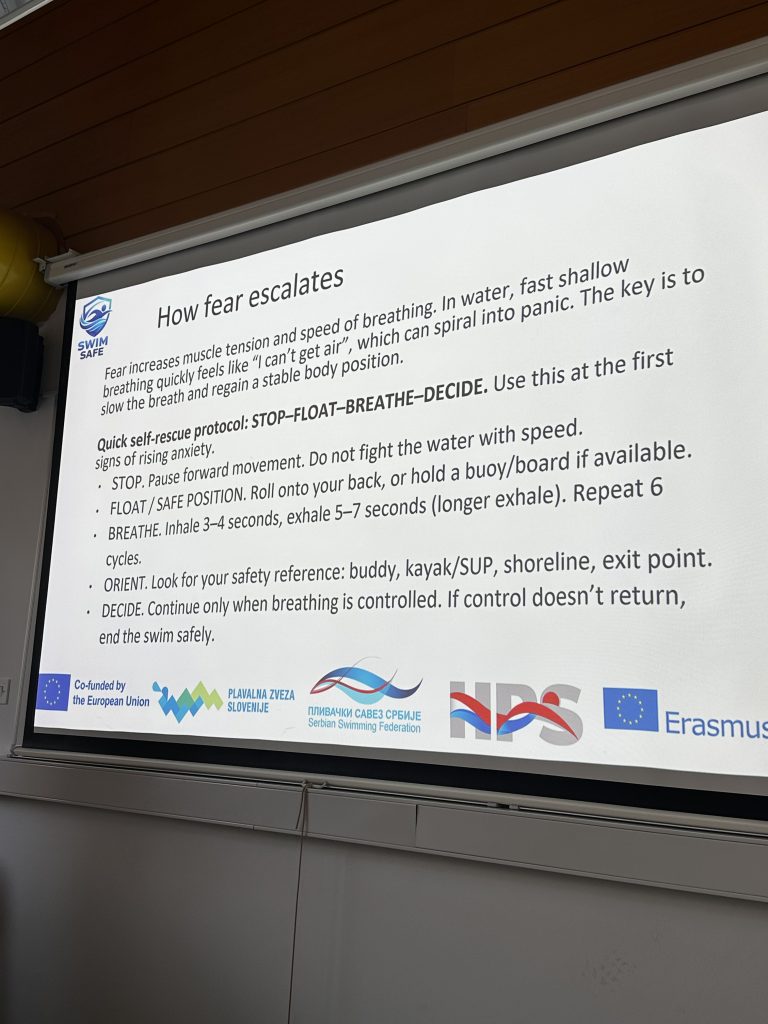
Over the three days, participants took part in sessions on a wide range of topics central to open water safety, including: Overcoming irrational fear — practical methods coaches can use to help swimmers manage anxiety and build confidence in open water conditions, and understand how factors such as cold shock, panic, or fatigue can affect a swimmer’s judgement. Swim schools in nature — how to structure and run swimming instruction safely in natural, open water settings such as rivers, lakes and coastal waters, adapting traditional pool-based teaching methods to environments where conditions can change within minutes. Safe competitive open water swimming — guidelines and best practices for organising and coaching athletes for open water competitions, including site assessment, risk rating, and clear “go / go with controls / no-go” decision-making before any event. Inclusion of swimmers with special needs — approaches for integrating swimmers with disabilities and special needs into safe training and competitive environments, ensuring open water swimming remains accessible to all, with attention to informed consent, safeguarding, and adapted communication.Self-rescue techniques — hands-on practice of the SWIMSAFE self-rescue sequence, Float – Breathe – Signal – Decide, alongside the safe-assistance principle for helping others in difficulty, Call – Shout – Reach – Throw – Guide, which prioritises calling for trained help and using equipment before anyone considers entering the water themselves.
A Regional Effort for Safer Open Water Swimming
The training reflects a growing regional commitment to raising safety standards in open water swimming, bringing coaches from three countries together to share knowledge, exchange experience, and build a common foundation of best practice. By combining theoretical sessions with hands-on practical work at the Faculty’s pool, the programme aimed to give coaches tools they can apply directly with their own swimmers, clubs, and schools — including a shared responsibility for the natural environments in which open water swimming takes place.
With 32 coaches now equipped with new skills and shared standards, the initiative marks another step toward safer open water swimming across the region — for competitive athletes, recreational swimmers, and swimmers of all abilities alike.
Next steps are sharing knowledge through regional capacity workshops, where hopefully a wider audience will be able to learn more about SWIMSAFE and through theoretical and practical workshops get to know all about safe swim in every enviroment.
This activity was carried out with the support of the Erasmus+ programme of the European Union. Views and opinions expressed are, however, those of the author(s) only and do not necessarily reflect those of the European Union or the European Education and Culture Executive Agency (EACEA). Neither the European Union nor EACEA can be held responsible for them.