
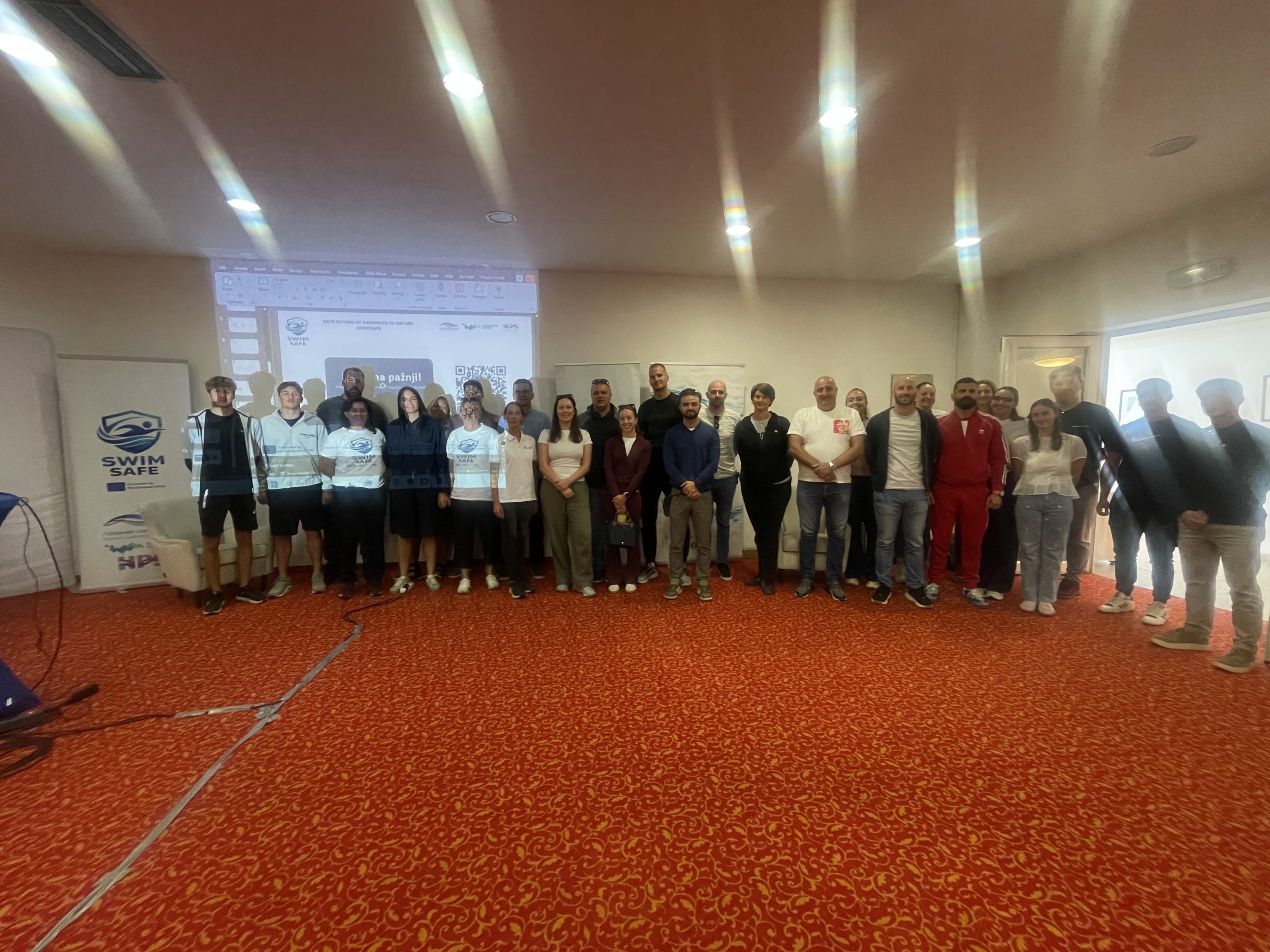
Šibenik, Croatia — 27 September 2026
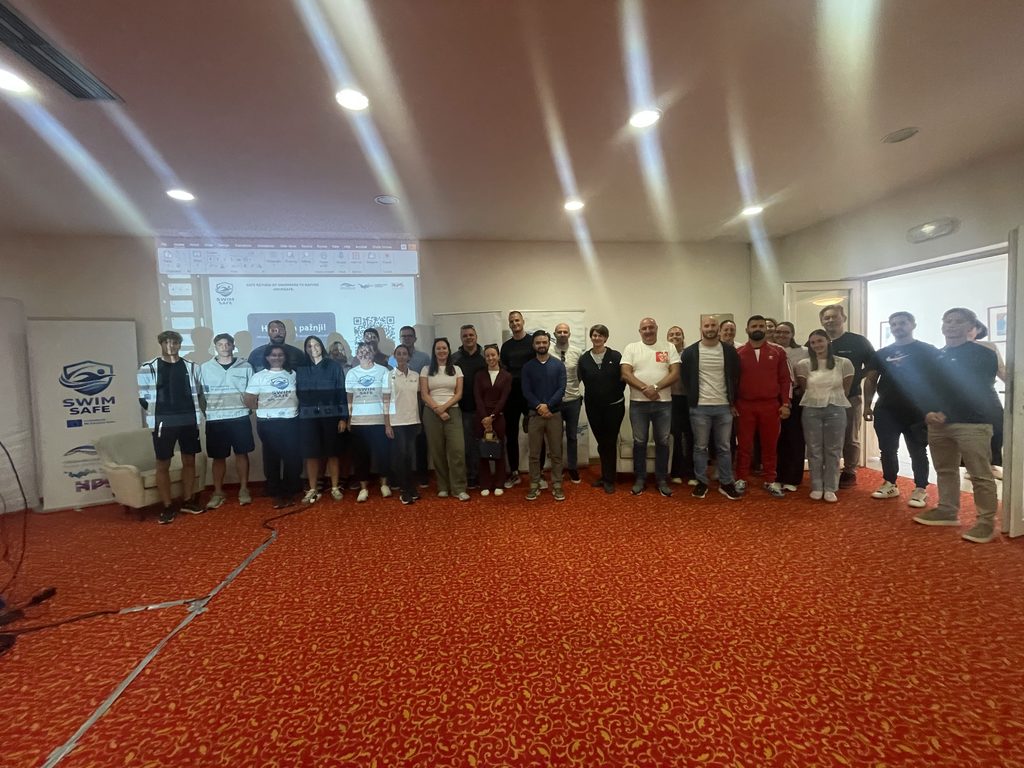
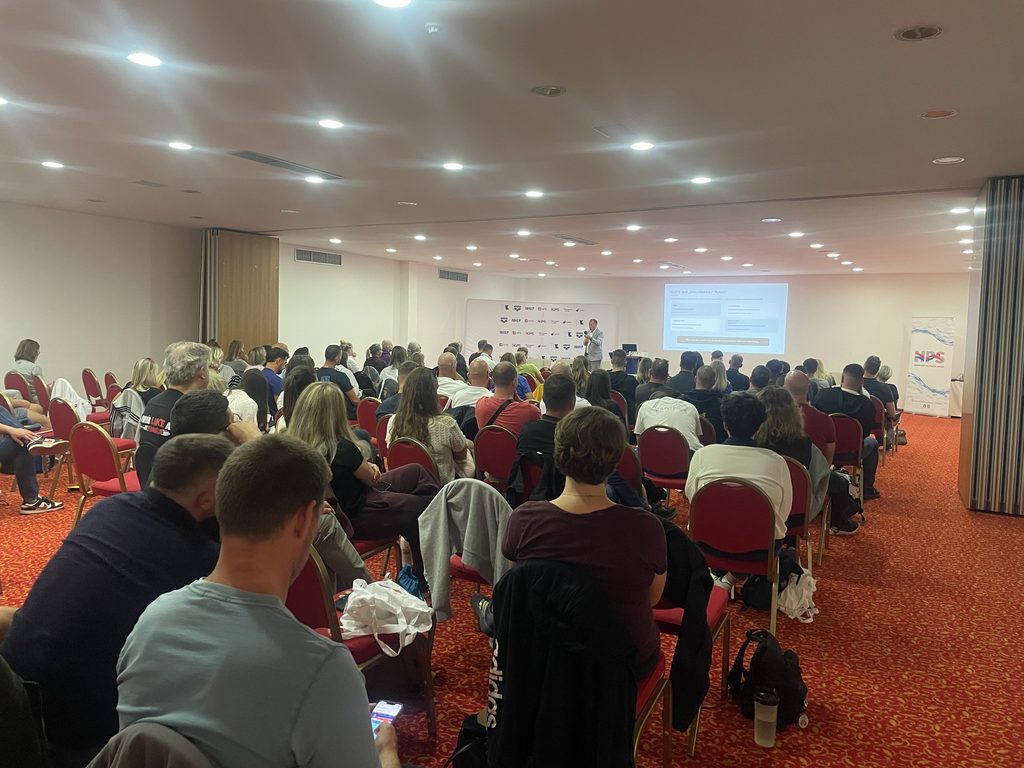
The SWIMSAFE project held its final conference on Sunday 27 September at Hotel Niko, Amadria Park in Šibenik, hosted by the Croatian Swimming Federation. After twelve months, three countries and a year of workshops, the closing event did what a good final conference should do: it spent as much time on what is still unresolved as on what was achieved.
Three sessions, two of them unforgettable
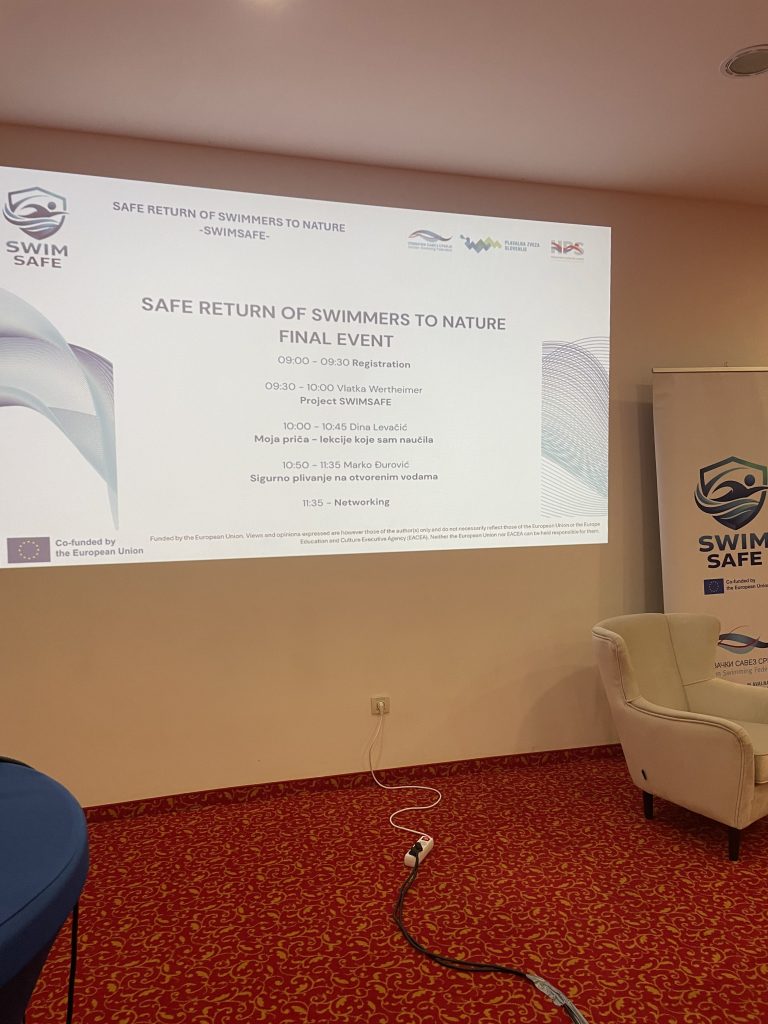
Vlatka Wertheimer opened by presenting the project — its objectives, the Open Water Safety Guidelines, the digital learning modules, and the run of regional activities that ran from the kick-off in Belgrade in January through Ljubljana, Kostolac, Zagreb and Biograd na Moru.
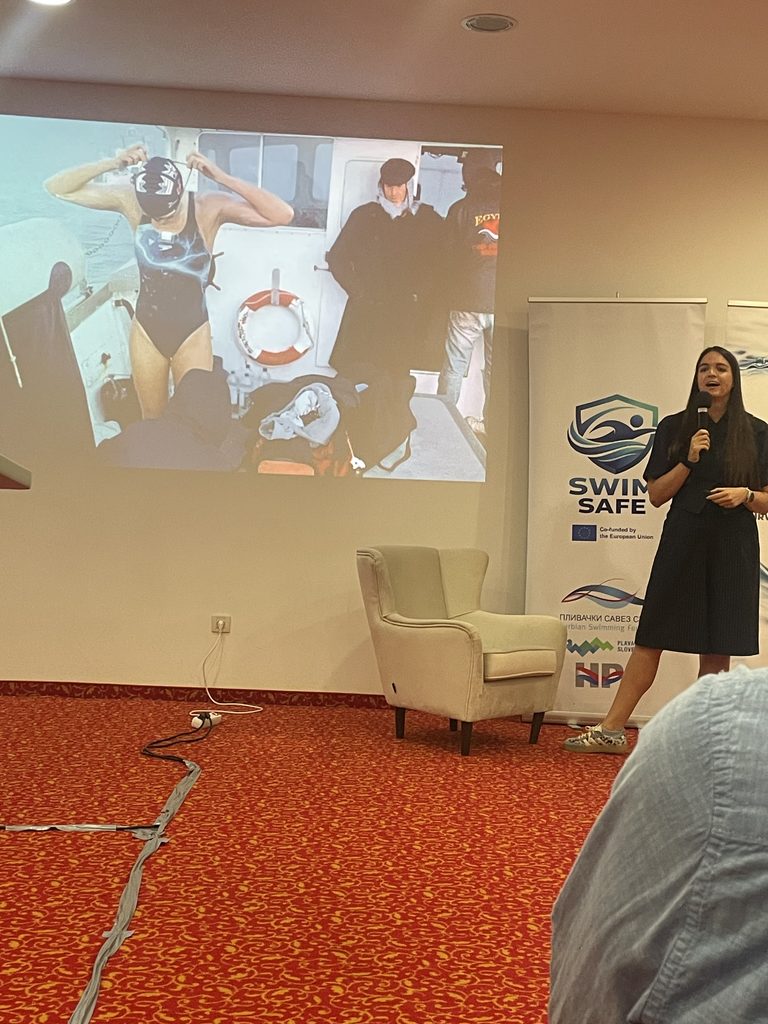
What followed was the emotional centre of the morning. Dina Levačić, the internationally renowned Croatian long-distance swimmer, spoke under the title “My story — the lessons I learned”, and delivered a session that was warm, deeply personal and dense with lived experience. Her account was not a list of achievements but a series of practical lessons drawn from years in open water — what cold actually does to judgement, how disorientation creeps in, when the right decision is to stop. For anyone who swims in open water, coaches it or organises it, this was the rare kind of session where the knowledge comes from having been there, and the room felt it.
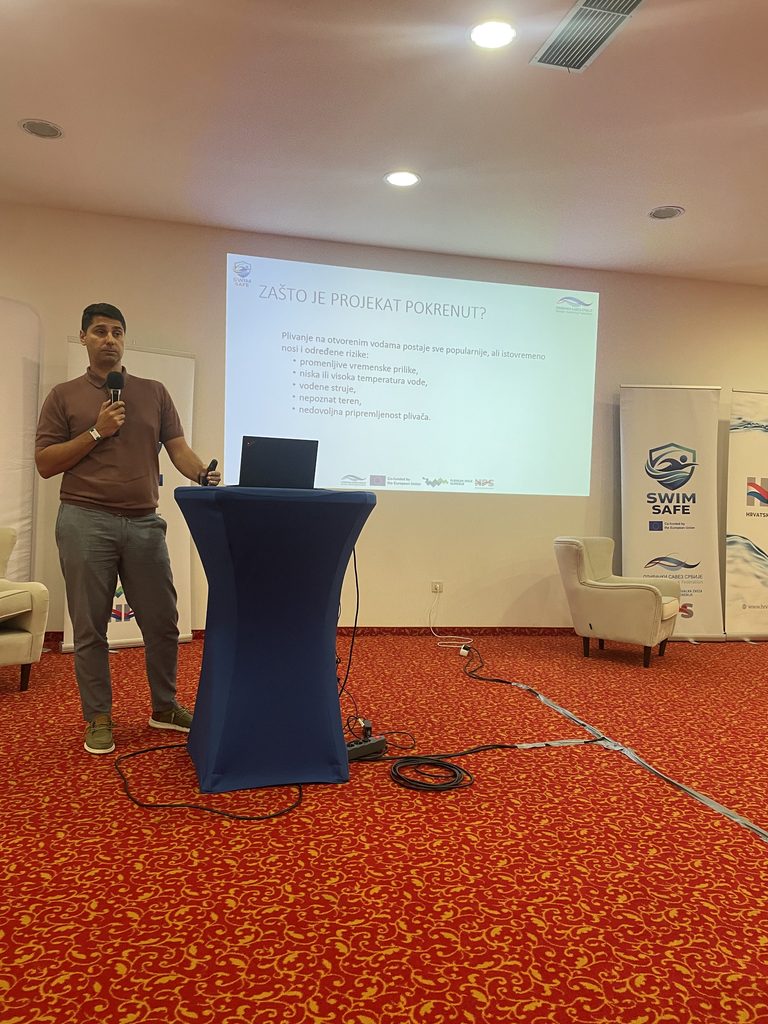
Dr. Marko Đurović, national team head coach of the Serbian Swimming Federation, then took the opposite and equally valuable approach. Working directly from the project’s own materials, he went source by source through what SWIMSAFE actually covers — the risk categories, the self-rescue sequence, the assistance principles, the site assessment and session planning templates — and showed the audience where each one sits and how it is meant to be used. It was a demonstration that the guidelines are not a document to be filed, but a working tool with an answer for each decision a coach or organiser has to make.
The discussion was the point
What followed was the most valuable part of the morning. Two themes emerged from the floor, and both point beyond the life of the project. The first concerns –medical certificates and responsabilities-. Requirements for health clearance in open water swimming are not applied consistently across the region — what one organiser asks for, another does not, and swimmers crossing borders for competitions encounter different expectations at each one. Participants argued that this needs to be harmonised: not more paperwork for its own sake, but a shared, predictable standard that actually reflects the demands open water places on the body. Cold water, distance from shore and long exposure are not the same risk profile as a pool race, and the medical requirements have not always caught up with that distinction as mentioned by one of the participants Marko Miličić.
The second concerns –the preparation of organisers at competitions-. Safety at an open water event is decided long before the start gun: in the risk assessment, the safety briefing, the positioning of rescue craft, the agreed criteria for postponing or stopping a race, and the clarity about who makes that call when conditions change mid-race. Participants were direct that this preparation varies considerably from event to event, and that a common baseline — something organisers across the region could be expected to meet — would raise the floor for everyone. This definitely could be another regional project with it’s first objective.
Both points landed as constructive demands rather than complaints, and both are precisely the kind of outcome the project was meant to provoke. SWIMSAFE set out to give coaches and clubs a shared safety framework; the conference showed that the same logic now needs to reach the institutional level, where rules are written and competitions are sanctioned.
What the project leaves behind
The Open Water Safety Guidelines, the digital learning modules with a self-assessment quiz, and the ready-to-use templates for risk assessment, session planning and incident reporting all remain freely available at www.swim-safe.eu, in the languages of the partner countries. Beyond the documents, the project leaves a network of coaches, instructors and teachers across Serbia, Croatia and Slovenia who have been through its workshops and who continue to pass the knowledge on.
A project has an end date. The water does not. Next summer, the same lakes, rivers and stretches of coast will fill with swimmers — and the measure of SWIMSAFE will be how many of them meet a coach, an organiser or a teacher who prepares differently because of it.
*SWIMSAFE — Safe Return of Swimmers to Nature (November 2025 – October 2026) is delivered by the Serbian Swimming Federation (PSS, coordinator), the Croatian Swimming Federation (HPS, training implementation lead) and the Slovenian Swimming Federation (PZS, dissemination lead).
*Co-funded by the European Union. Views and opinions expressed are however those of the author(s) only and do not necessarily reflect those of the European Union or the European Education and Culture Executive Agency (EACEA). Neither the European Union nor EACEA can be held responsible for them.*